Malawi’s prison authorities are concerned about recidivism—and it is not just a big word.
They see correctional facilities decongested if inmates walk free and sin no more, but ex-convicts keep returning to the overcrowded confinements notorious for a punitive diet, unsanitary conditions and other inhumane routines.
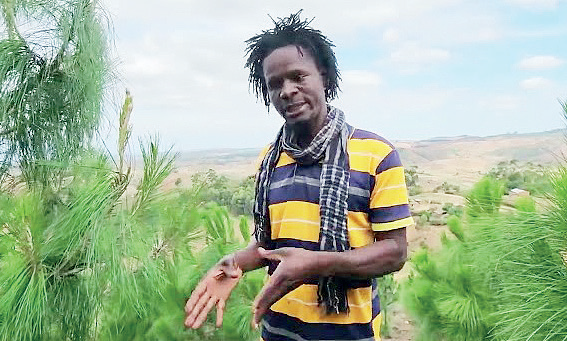
Morris Chilewani, 30, from Kankhuni Village near Tsangano Market in the rural interiors of Ntcheu District, was incarcerated three times.
He experienced firsthand the reason why some inmates feel safer incarcerated than free at last.
“Our society is cruel,” he says. “When you leave prison, even friends and relatives think that you are back to rob them. Imagine neighbours with nothing worthwhile shunning you as if you will attack them for no reason.”
In 2019, Chilewani was sentenced to 31 years for 12 counts of money-related crimes, but the Supreme Court of Appeal acquitted him.
He blames it on a gang leader who promised to take him to the US.
“I was lured by the American dream I had only encountered in glossy magazines and Hollywood films,” he says.
However, there was not much to smile about when the apex court miraculously cancelled his jail sentence.
He says: “Home was no longer home. Everyone was either afraid or gossiping about my dark past. Potential suitors were fleeing from me like a beast.”
However, Chilewani’s ruled out a possible escape back to prison.
Instead, he found solace in repairing the green cover of the nearest hill stripped by unregulated logging, charcoal production and scramble for farmland amid Malawi’s massive population boom.
Today, his village and surrounding communities hail him for making Mwala wa Mphawi Hill green again.
Chilewani owns a fast-expanding forest, showing it is possible to replace trees faster than they are being felled.
“Trees don’t talk or judge anyone. They make our land beautiful, slow running water that scrapes fertile soil and refresh the air we breathe. Their value increases with time,” he reasons.
His hillside forest started in January 2021 with about 1400 blue gums covering an acre acquired at K140 000 from kachasu distils and Irish potato sales.
Says Chilewani: “I was at Blantyre Prison when I first thought about planting trees. I served 18 months before my lawyer Fostino Maere successfully appealed against my conviction.
“Upon being acquitted, I returned home to start farming. Using change from the money for my homecoming, I started selling kachasu to buy land and fortunately bought the first plot from one of my customers.”
The man-made forest now comprises almost 45 000 eucalyptus, pine and mkungudza trees covering 17.5ha.
“They’re all planted for timber, but the eucalyptus is also good for poles and firewood. The market is huge as Malawians now import these products, including charcoal, from neighbouring countries.”
Studies show that Malawi loses about 33 000 ha of forests annually due to overreliance on fuelwood, expansion for farmlands and new settlements.
About 90 percent of the loss of green cover—some 58 000 ha—occurred in natural forests, findings Susan Ngwira and Taiji Watanabe.
In 2022, the Department of Forestry selected Chilewani’s forest for a K700 000 performance-based grant under the Malawi Watershed Services Improvement Project (Mwasip) funded by the World Bank. The project supports outstanding individuals and groups involved in sustainable land management and making Malawi greener.
The forest measured 2.4ha when Mwasip weighed in.
The government project trained the successful grant recipients in how to plant and manage trees.
“I planted 5 480 trees with Mwasip support. I also engaged my neighbours to clear weeds and make firebreaks in the forest,” he says.
His record book shows only 117 wilted, especially pine planted at the end of the 2022/23 rainy season.
“About 99 percent of blue gum survived,” Chilewani brags.
He says Mwasip support arrived on time.
“The hillside looked so green and stunning that I wanted to plant some trees though I didn’t have adequate resources. Mwasip gave me the money and skills to kill two birds with one stone,” he states.
In the valley below the hill, Chilewani produces truckloads of maize, beans and Irish potatoes for sale.
He now owns a go-to bottle store in his locality, a motorcycle and a house under construction.
For village head Kakhuni, this is a tale of a rejected stone that became a cornerstone.
He discloses: “People who used to frown now know him as an enterprising hard worker. Those who once shunned him now learn one or two things from him and women who rebuffed him now get closer.
“Most importantly, he is our go-to person for tips on everything to do with trees.”
However, Chilewani says he is not in a hurry to marry.
“I will marry when I want. Only my dream to go to America cannot wait,” he declares
His tone exudes unfazed determination.
“I don’t have to rob anyone to earn an air ticket to America. I‘ll buy one using clean money. After all, I just want to see America up-close. There is abundant wealth here.”
Chilewani says he regrets migrating to Blantyre City and the lost years behind bars.
“My peers who remained in the village were better off when I returned from prison.
“So, the youth shouldn’t rush to escape to town. There are not enough jobs for everyone. Stay in the village and plant trees or crops. The price of trees and food increases with time.”